CO2-Responsive Polymers for Membrane Applications: Synthesis and Adsorption Performance
The pressing need to address climate change has driven research into novel CO2 capture materials.
Autor: Dr. Prokopios Georgopanos, Helmholtz-Zentrum Geesthacht, Institute of Membrane Research
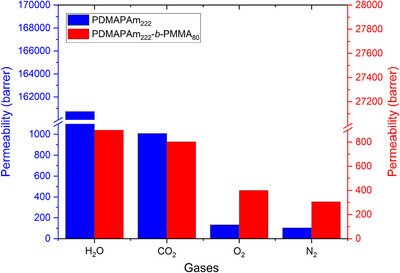
Here, the synthesis of CO2-responsive diblock copolymers, i.e., poly(N-[3-(dimethylamino)propyl]-acrylamide)-b-poly(methyl methacrylate) (PDMAPAm-b-PMMA) through a two-step RAFT polymerization process, as well as the use of the synthesized diblock copolymer as a membrane for CO2 capture were investigated. The resulting diblock copolymer features distinct segments with different properties. The PDMAPAm segment offers CO2-responsive characteristics, while the PMMA segment provides mechanical stability. The gas transport properties of the fabricated thin-film composite membrane composed of PDMAPAm-b-PMMA or PDMAPAm and polydimethylsiloxane with a gutter layer were measured and the CO2 adsorption behavior of both PDMAPAm and PDMAPAm-b-PMMA was evaluated. The copolymer exhibits responsiveness to CO2 and can be customized for use in the fabrication of membranes and membrane adsorbers for direct air capture technologies.
Dr. Prokopios Georgopanos, Helmholtz-Zentrum Geesthacht, Institute of Membrane Research
[email protected]