13.03.2026 • Forschung

DEXPI 2.0: Synergistic Integration of PFD and P&ID in a Unified Digital Model

With DEXPI 2.0, the DEXPI association aims to release its specifications for BFDs/PFDs (DEXPI Process) and P&IDs (DEXPI Plant) in one overarching package the first time.

Autor: Dr. Gregor Tolksdorf, Evonik Industries AG, Global Digital Services
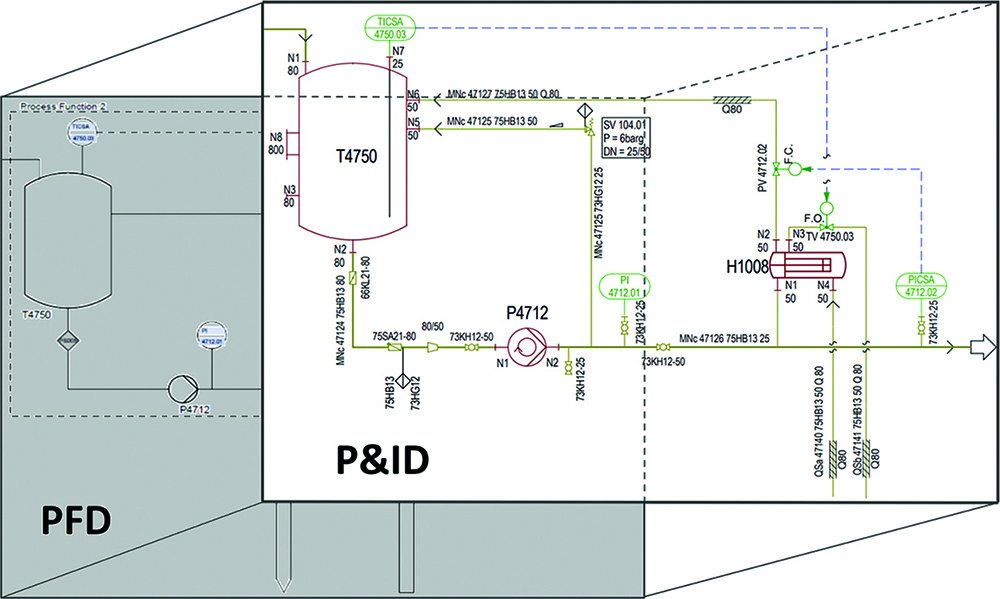
PFD and P&ID as two different layers of a process plant's functional description.
© Evonik Industries AG, Global Digital Services

This comes with a new simplified serialization and handover format being extensible for future needs and use cases. This short communication based on the PEMT 2024 presentation names the main motivating vision for going this way with the DEXPI specifications: “seamless information handover from simulation to PFD” and “integration of PFD with P&ID”. As an outlook, ideas about the future mechanisms allowing explicit information integration with DEXPI 2.x are sketched.

Dr. Gregor Tolksdorf
Evonik Industries AG, Global Digital Services

DOI: 10.1002/cite.70009

Anbieter

Evonik Industries AG

Goldschmidtstraße 100
45128 Essen
Deutschland

Kontakt zum Anbieter


CHEMonitor

Meinungsbarometer für die Chemieindustrie

Meinungsbarometer für die Chemieindustrie

Trendbarometer für die Chemie- und Pharmaindustrie. Präsentiert von CHEManager und Santiago Advisors Management-Beratung für Strategie und Organisation.

Lebensmitteltechnik

Know-how für die Food&Beverage-Branche

Know-how für die Food&Beverage-Branche

Branchennachrichten, Fachartikel und praxisorientierte Anwenderbeiträge zu allen Aspekten der gesamten Wertschöpfungskette der Lebensmittel- und Getränkeindustrie.

Meist gelesen

Photo

Nachhaltige Wasserstoffproduktion mit Blaualgen

Forschende der Universitäten Kassel, Bochum und Lissabon haben eine Methode entwickelt, um die photosynthetische Wasserstoffproduktion mit Cyanobakterien zu verbessern. Ein Redoxpolymer schützt die Zellen vor Sauerstoff und hält die beteiligten Enzyme dauerhaft aktiv. Die Studie erschien in der Fachzeitschrift Angewandte Chemie International Edition.